For years, they lived with unanswered questions. Could mathematics help Kenya better predict and fight malaria? Could artificial intelligence learn to understand the cry of an infant? Could innovative financing improve the quality of healthcare? What makes people take, or avoid, financial risks? Could scattered mental-health data across Africa be brought together to identify those most at risk? And what can the COVID-19 pandemic teach us about predicting the next public-health crisis?
These were not questions with easy answers. Finding them demanded years of research, countless revisions, difficult defences, rejected manuscripts, long nights and, for some, the delicate balancing act of scholarship, careers and growing families.
On Friday, August 7, 2026, however, the questions gave way, if only briefly, to celebration.
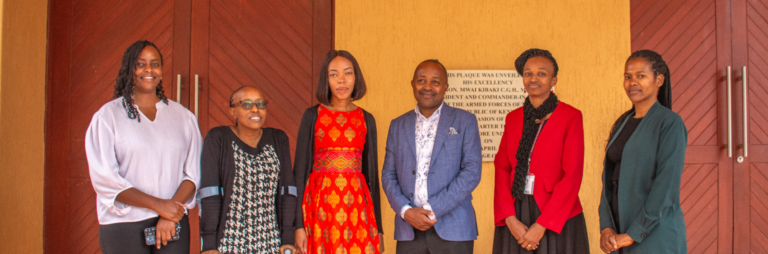
Ahead of Strathmore University’s 2026 graduation ceremonies, slated for August 12-14, 2026, the Office of Graduate Studies hosted a luncheon celebrating the University’s latest cohort of PhD graduands. This year, Strathmore is set to graduate 11 doctoral students. Behind that number are 11 stories of perseverance and 11 bodies of research confronting some of the most consequential questions facing Kenya, Africa and the wider world.
For the graduands, the luncheon represented their transition into a new community, that of scholars expected to create knowledge.
“You are coming into a new world and getting into uncharted waters,” said Prof. Vincent Omwenga, a supervisor from the Strathmore University School of Computing and Engineering Sciences. “You have been a consumer of knowledge; now you are expected to be a creator of knowledge.”
Research confronting real-world problems
That responsibility is already evident in the breadth of research undertaken by the graduating scholars.
For Sharon Okwomi, the challenge was malaria, a disease that continues to impose a significant public-health burden across sub-Saharan Africa.
Her research brought together Bayesian inference, Approximate Bayesian Computation and Stochastic Differential Equations to develop a comprehensive framework for analysing malaria transmission. The work estimated critical epidemiological parameters, explored regional variations in the basic reproduction number and incorporated environmental variability and random fluctuations into disease modelling. The result is an uncertainty-aware framework with the potential to improve predictive accuracy and support targeted, climate-sensitive malaria interventions in Kenya.
Geofrey Owino, meanwhile, turned his attention to one of humanity’s earliest forms of communication, an infant’s cry. Infants cannot tell caregivers whether they are hungry, uncomfortable or in distress. They cry. Geofrey’s research sought to determine whether technology could listen more intelligently.
He developed an autonomous infant-cry classification model integrating a Denoising Autoencoder, a federated CNN–Transformer architecture, meta-learning, multi-task learning and knowledge distillation. Behind the formidable computational terminology lies an intensely human ambition of helping caregivers and healthcare professionals interpret infant cries more accurately while protecting sensitive audio data. The proposed framework could support real-time infant-cry monitoring, neonatal care and timely clinical intervention.
The intersection between technology and health also shaped Sidi Mpa Mwakalu’s doctoral research. Faced with the challenge of determining appropriate dietary needs for people living with Type II diabetes, she developed a context-based data-mining algorithm using patient biomarkers. Her work combined mathematical modelling with a neural-network classifier to examine how macronutrients affect plasma glucose and how the physiological characteristics of an individual’s glucose-insulin system could inform dietary recommendations.
Elsewhere, Bylhah Mugotitsa confronted another increasingly urgent African health challenge: the fragmentation of mental-health data.
Her research examined how data harmonisation and predictive analytics could help bridge Africa’s mental-health data divide. Bringing together datasets and internationally recognised frameworks, her study identified predictors of mental-health risk among university and community populations. Among university populations, low socioeconomic status and high social-media use emerged as significant risk factors, while community populations displayed different risk profiles. The research offers a potentially scalable approach for improving mental-health research, policy and targeted interventions in Kenya and other African settings.
Joyce Kiarie’s work revisited a crisis the world knows all too well: COVID-19. Her research explored mathematical, statistical and computational approaches for understanding and predicting pandemic progression. From stochastic modelling and reproduction numbers to deep-learning and epidemiological models, the work underscored an enduring lesson from the pandemic: timely interventions, effective surveillance and accurate data can fundamentally alter the trajectory of an outbreak.
From hospitals to households
The graduating cohort also investigated some of the structural questions confronting economies and institutions. Ezekiel Meteine Karino examined whether innovative financing could help address persistent problems within Kenya’s tertiary healthcare system.
His research investigated asset lease financing, performance-based financing and social impact bond financing, finding that each had a positive and statistically significant effect on the quality of healthcare in tertiary hospitals. The study also highlighted the importance of public-private partnership contracts and government stewardship, concluding that innovative financing mechanisms can substantially improve tertiary healthcare when appropriate governance and policy constraints are addressed.
Reflecting on his doctoral experience during the luncheon, Ezekiel pointed to the value of connecting scholarship with the problems unfolding beyond the University.
“The scholarship provided us with practical case studies on issues affecting society,” he said, adding that guest lectures had also enriched the experience.
For Noah Otinga, the focus was Africa’s capital markets. His research examined the interplay between financial inclusion, financial literacy, openness and technological advancement in capital-market participation and development.
Drawing on household data from the Nairobi Metropolis and secondary data from 34 African countries, the study found, among other things, that financial literacy and financial inclusion significantly increase the likelihood of participating in capital markets. It also provided evidence that fintech diffusion influences the relationship between financial inclusion and capital-market development.
For Noah, however, the lessons of the PhD extended beyond economics and finance.
“It has been a journey of thanksgiving,” he said. “It has taught me patience and humility.”
Those qualities resonated with Lydia Muthoki Nthei, whose research turned inward to the workplace.
Her study examined how different approaches to talent management influence interpersonal conflict among employees in Kenya’s banking industry. Analysing 399 valid responses, she found that inclusive talent-management approaches significantly reduced interpersonal conflict, while exclusive approaches exacerbated it. Employee engagement emerged as particularly important, both directly reducing conflict and helping attenuate some of the negative effects associated with exclusive talent-management approaches.
“The journey has been transformative and rewarding,” Lydia reflected. “I feel I am ready for the world of research, and I thank my supervisors for the support.”

A toast to the journey, the resilience and what comes next.
Climate, communities and vulnerable populations
For Kevin Omondi Otieno, the research question lay in the skies. As climate change makes relationships among weather variables increasingly consequential, Kevin developed an integrated copula-selection method for analysing climate data.
His research combined multiple goodness-of-fit tests with stratified cross-validation to improve model robustness and selection accuracy. Applied to Kenyan climate data, the integrated approach, particularly when paired with the Benjamini-Hochberg aggregation technique, outperformed traditional approaches such as Fisher’s method and Bonferroni correction. His findings strengthen the statistical toolkit available for understanding complex relationships among climatic variables.
For Kevin, reaching this point was not an individual achievement.
“Partnership has been key for me for this journey,” he said.
Bojo Samuel Scopas, meanwhile, took his research to Nimule Town in South Sudan, where adolescents affected by HIV and AIDS face the additional vulnerabilities associated with living in a conflict-affected environment.
His study evaluated the relationship between an Orphans and Vulnerable Children programme and HIV prevention and treatment outcomes among adolescents. The research found improvements after programme delivery in areas including knowledge of HIV prevention methods, reported risk behaviours, HIV testing and status disclosure, and the frequency of missing antiretroviral treatment.
The findings point towards the potential of integrating such programmes into broader HIV responses designed to reach adolescents living with or affected by HIV and AIDS, particularly in fragile settings.
When financial decisions are not entirely rational
For Mercy Inyangala Omuyoma, who graduates with a PhD in Finance from the Strathmore Institute of Mathematical Sciences, the question was deeply human. What really happens when people make financial decisions?
Traditional financial thinking may assume that investors behave rationally. Mercy’s research explored the behavioural forces that complicate that assumption, examining overconfidence, the disposition effect and risk-taking behaviour when people make financial decisions individually and in groups.
Her study drew on trading behaviour data from the Central Depository and Settlement Corporation, focusing on group and individual investors at the Nairobi Securities Exchange. She also used experimental data from 129 university students and 135 participants in informal savings and investment groups, chamas, in Kenya.
The findings revealed a significantly higher disposition effect among group investors at the NSE than among individual investors, demonstrating the influence group dynamics can have on trading behaviour. Investment groups were also more risk-averse than students, while framing influenced decisions among chama participants. Both students and chamas displayed overconfidence in stock-price forecasting, although students exhibited greater overconfidence.
In a country where chamas are important vehicles for savings, investment and entrepreneurship, Mercy’s research provides insights that could inform understanding of investor behaviour and strategies aimed at strengthening financial inclusion.
Yet behind the financial models was another balancing act.
“I have gotten two children during this journey,” Mercy shared during the luncheon. “I have had to balance family, work and PhD.”
Her words captured something thesis abstracts rarely reveal.
Behind the statistical models, regression analyses, theoretical frameworks and carefully worded conclusions are lives being lived. Children are born. Families grow. Careers continue. Manuscripts return covered in comments. Data refuse to behave. Responsibilities compete for attention. And somehow, one chapter follows another until a thesis emerges.
That is perhaps why the luncheon was as much about resilience as it was about scholarship.
The title comes with responsibility
Yet amid the celebration came a reminder. Prof. Bernard Shibwabo told the graduands that the title they were about to acquire comes with obligations.
“The title comes with responsibility,” he said.
He encouraged them to leverage research opportunities and make use of the knowledge they had gained. More importantly, he asked them to remember the difficult moments, the manuscript rejections, the defence process and the setbacks encountered along the way, not with bitterness, but as evidence of the resilience they had developed.
And graduation, he stressed, should never signal the end of learning. With lifelong learning among the University’s values, Prof. Shibwabo encouraged the graduands to continue seeking knowledge, assuring them that the University remained available to mentor them through the next stage of their scholarly journeys.
Prof. Ismail Ateya, the Chair of the Board of Graduate Studies and Director of the Office of Faculty Affairs, captured the significance of the occasion using the analogy of stagnant water. He challenged the new scholars never to become comfortable with what they had already achieved. They had moved this far. They could not afford to remain there.
“Move to the next chapter,” he urged them.
He also encouraged them to take advantage of the networks and institutional linkages available through Strathmore, while allowing the University to benefit from the linkages and communities they themselves would build.
Welcome to the scholarly world
Prof. Omwenga similarly cautioned that the scholarly world the graduands were entering would demand courage, curiosity and humility.
“It is always good to be in the midst of upcoming scholars,” he said. But becoming a scholar, he reminded them, means becoming comfortable with uncertainty.
“Embrace the unknown. Learn to ask the right questions in your quest to create knowledge.”
There would be setbacks. There would be questions without immediate answers. His advice was to build communities of practice rather than attempt the journey alone.
He also offered a reminder that can easily be lost amid the demands of research, publishing and teaching.
“Scholarship matters, but so does the scholar. Protect your health. You are an important resource to your family, university, and community,” he told them. “You carry the hope of your whole community.”
For Dr. Vincent Were, a supervisor from Strathmore University Business School, the arrival of another cohort of scholars was cause for optimism.
“Welcome to the world of research,” he said. “We need extra hands to do the work we do.”
He encouraged the graduands to join their respective professional bodies and continue building the professional and scholarly communities through which knowledge grows.
Eleven theses. Eleven journeys. A new beginning.
Soon, the gowns will be worn, names will be called and degrees conferred. And Strathmore University will graduate 11 PhD scholars. Yet perhaps the more consequential measure of this cohort will not be the number of doctorates awarded.
It will be what happens afterwards.
Their research has already confronted questions that matter far beyond the University: It ventures into hospitals and households, workplaces and financial markets, communities and climate systems, seeking better ways to predict malaria, interpret an infant’s cry, finance healthcare, manage workplace conflict, deepen participation in Africa’s capital markets and respond to a changing climate. It explores new possibilities for diabetes management, HIV prevention, and mental health interventions, draws lessons from the COVID-19 pandemic, and challenges our understanding of risk, confidence, and collective decision-making in finance.
These are not questions destined to remain within the pages of a thesis. They speak to real people, real institutions and some of society’s most pressing challenges.
Now comes the greater task of turning that knowledge into impact.
Article written by Stephen Wakhu